
Mombasa, Kenya | November 2026
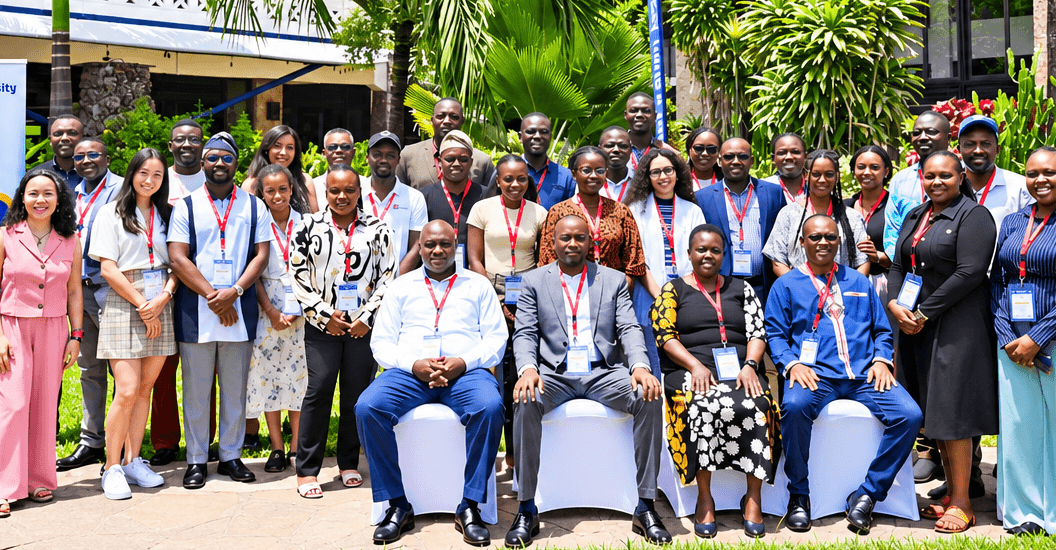
Mount Kenya University (MKU) strengthened its position as a hub for international academic collaboration and innovation by hosting the ACCESS IDEAS International Summer School 2026 at its Mombasa Campus from 5th to 11th November 2026.
The Summer School brought together students, academics, researchers and industry practitioners from eight universities across Kenya, Ghana, Nigeria, Ethiopia, Rwanda, Tunisia, Benin and Germany. The programme provided an international platform for exchanging ideas, building professional networks and exploring practical approaches to addressing challenges facing Micro, Small and Medium Enterprises (MSMEs).
The initiative, implemented under the African Centre for Career Enhancement and Skills Support (ACCESS), aligns with the broader ACCESS 2.0 agenda of strengthening University-Business Linkages, enhancing graduate employability, advancing entrepreneurship and building institutional capacity.
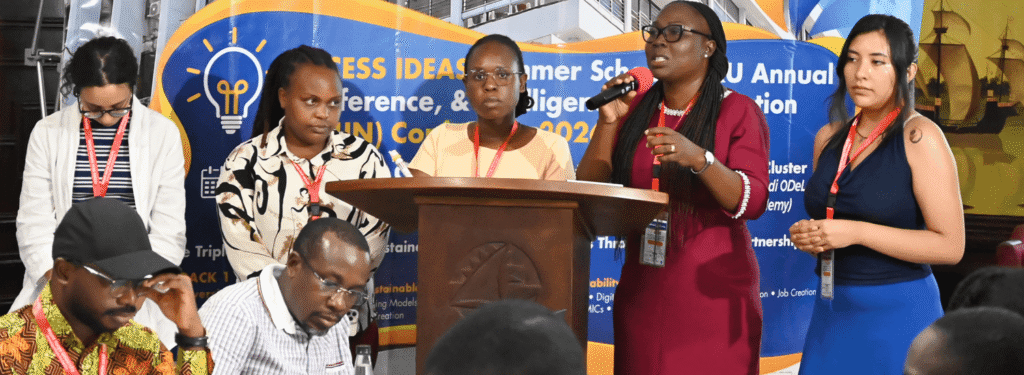
Moving beyond conventional classroom instruction, the Summer School immersed participants in experiential learning through industry-led presentations, mentorship, collaborative projects, team-building activities and innovation pitching sessions.
Working in multicultural and interdisciplinary teams, students identified real-world challenges affecting businesses and communities, developed innovative concepts and presented solutions with the potential to support enterprise development across their respective countries.
Bismark Yeboah, ACCESS Coordinator at Leipzig University, Germany, expressed excitement about the quality of ideas emerging from the student teams. He highlighted the value of cross-country collaboration, noting that participants benefited from exchanging perspectives, learning from one another and engaging with experienced industry practitioners and entrepreneurs.
The industry engagements provided practical insights into what it takes to transform an idea into a sustainable business. Stella Muhoro of Brands & Beyond Kenya challenged participants to begin with the problem rather than the prototype, emphasising the importance of understanding market needs and validating solutions before investing in product development.
German entrepreneur Kai Hempel shared lessons on building resilient and scalable enterprises, highlighting the importance of strong business systems, reliable processes and effective teams in sustaining growth.
This practical approach was reinforced through a series of interactive learning activities, including the Marshmallow Challenge, facilitated by Leonie Theus of Leipzig University. The exercise encouraged participants to think creatively, experiment, communicate effectively and appreciate the value of teamwork, prototyping and testing ideas before arriving at workable solutions.
A key highlight was the engagement with I Choose Life–Africa (ICL), an organisation collaborating with MKU through ACCESS, which offered participants an opportunity to connect classroom concepts with the lived experiences of MSMEs.
Participants also benefited from mentorship and pitching exercises, where they presented their ideas and received feedback from ACCESS coordinators, board members and invited experts. These engagements strengthened their confidence, problem-solving abilities, communication skills and understanding of how innovative concepts can be developed into viable solutions.
Learning beyond the classroom: Culture, heritage and the Blue Economy
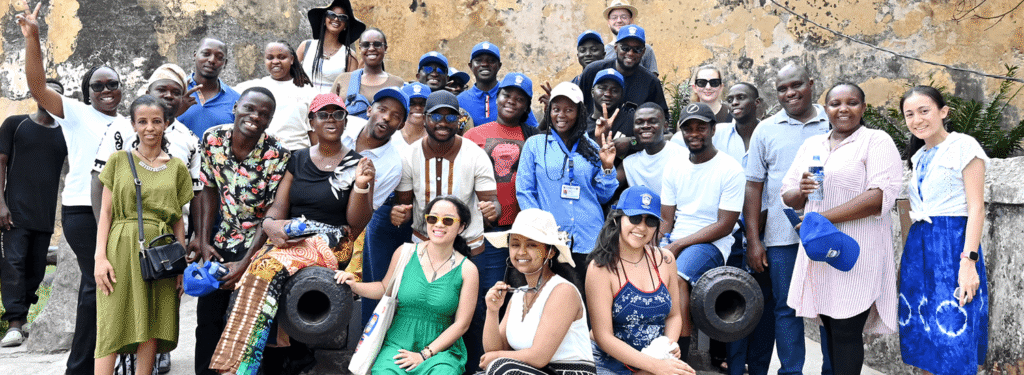
The Summer School also incorporated cultural immersion and industry exposure, giving international participants an opportunity to experience the rich heritage, economic potential and diversity of Kenya’s Coast region. Delegates visited historical and cultural attractions, including Vasco da Gama Pillar, as well as Mama Ngina Waterfront.
The ACCESS IDEAS International Summer School 2026 reinforced the importance of international academic collaboration, industry engagement and experiential learning in preparing graduates for an evolving world of work.
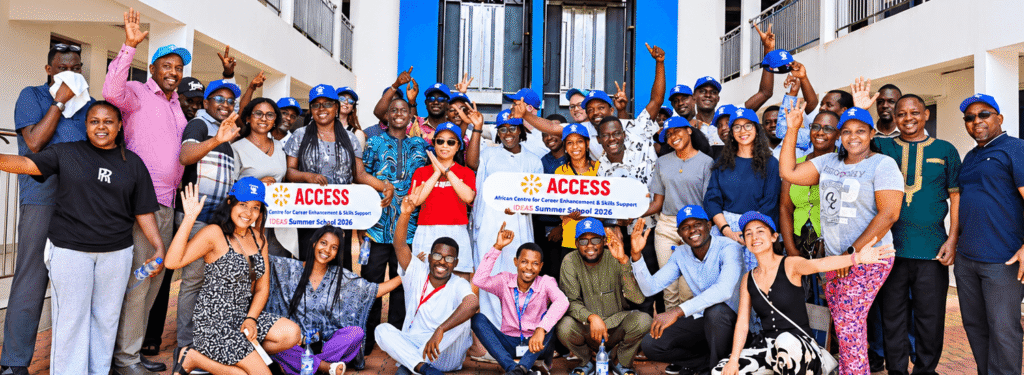
For MKU, hosting the Summer School provided an opportunity to strengthen its international partnerships while advancing its commitment to producing graduates equipped with relevant skills, entrepreneurial mindsets and the capacity to create solutions that respond to real-world challenges.
From ideas to innovation, and from collaboration to impact, MKU continues to champion transformative learning experiences that connect universities, industry and communities in building sustainable solutions for Africa and beyond.


